Solar Sharer explained: free midday power and what it means for EV owners

From 1 July 2026, millions of Australian households can access three hours of free electricity every day through the Solar Sharer scheme. If you drive an EV (or you're thinking about one), this is worth knowing about. A smart home charger running during the free window can add up to 150km of range without costing you a cent in electricity.

But Solar Sharer isn't as simple as "free power for everyone." There are eligibility requirements, a daily cap, and trade-offs built into the tariff structure that are worth understanding before you sign up. This guide breaks down exactly how the scheme works, who qualifies, and how to make the most of it.
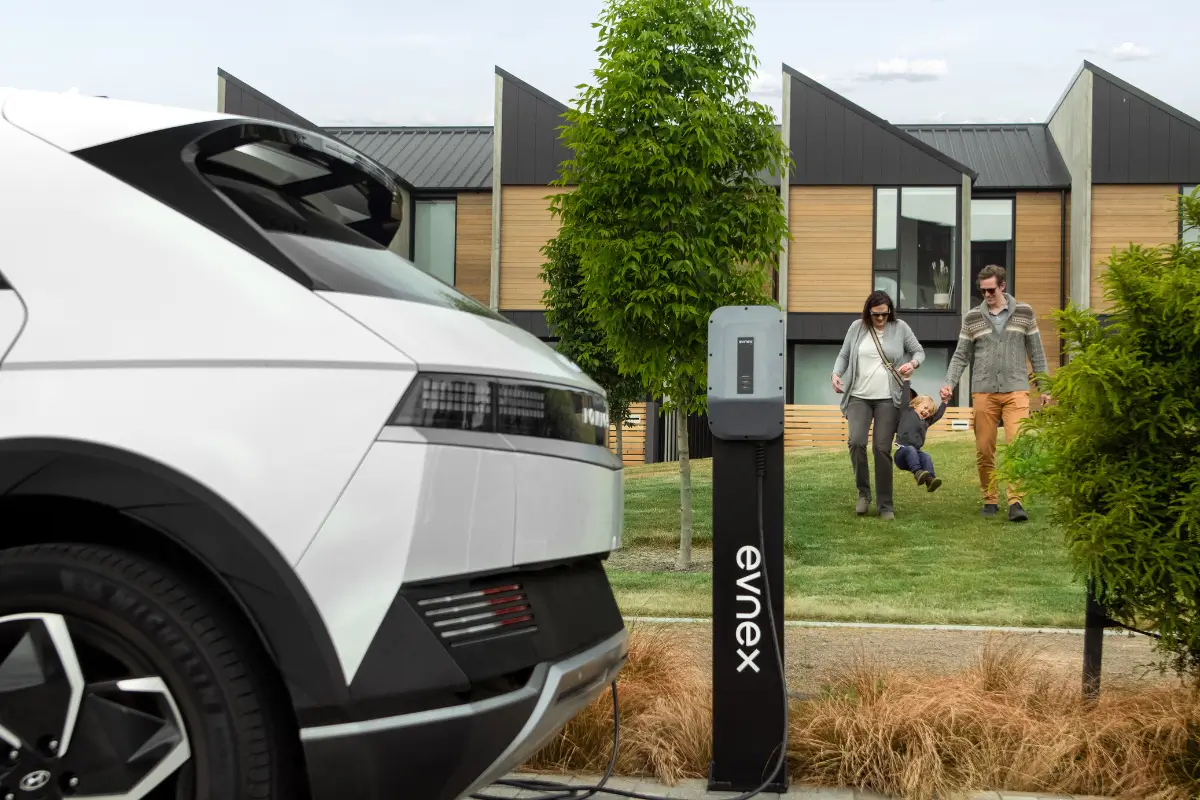
family walking towards charging EV

Solar Sharer at a glance

Solar Sharer at a glance
What is it? A federal government scheme requiring energy retailers to offer residential plans with three hours of free electricity in the middle of the day
Start date 1 July 2026
Participating states NSW, SA and southeast QLD
Free window NSW: 11 am to 2 pm AEST
SA: 12 pm to 3 pm ACST
Southeast QLD: 11 am to 2 pm AEST
Daily cap 24 kWh of free usage during the window
Solar panels required? No. Anyone in the participating regions can access the 3 hours of free power
Renters eligible? Yes
How to access Opt in through your electricity retailer. You need a smart meter.

Why does Solar Sharer exist?

Australia has the highest rate of rooftop solar adoption in the world. Over four million households now have panels on their roof, and thanks to state-based and federal incentives, the numbers keep growing. It’s great for cost savings, and for the environment, but it's created a structural problem in the electricity market.

During the middle of the day, those millions of solar systems are generating more electricity than the country can use. Wholesale prices during the midday hours regularly drop to zero, and sometimes go negative. All that clean energy is effectively going to waste. This is sometimes referred to as a solar glut.  

In addition to this, electricity demand spikes in the late afternoon and evening when people get home, turn on appliances, and cook dinner. That's when power is most expensive.  

Solar Sharer is designed to fix this imbalance by giving Australian households a reason to shift their energy use into the middle of the day. Run your dishwasher at noon instead of 7pm. Set your aircon to fire up at 11am AEST. Charge your EV while the sun is shining.

If enough households shift enough load, the grid benefits twice: less wasted solar during the day, and less pressure (and lower prices) during the evening peak.

Is Solar Sharer actually worth it?  

Retailers don't absorb the cost of giving away three hours of electricity. Most will recover it through slightly higher rates during peak or shoulder periods, or through higher daily supply charges.  

This means the maths doesn't check out for every household. If you can't shift meaningful usage into the free window, and you're currently on a competitive market offer, switching to a Solar Sharer plan could actually increase your bill.  

EV owners are in a different position. An electric vehicle is one of the few household loads large enough to tip the equation. A 7.4kW charger running for three hours draws around 22kWh, which is close to the entire daily Solar Sharer cap on its own. Moving that kind of energy usage into the free window can take a real chunk off your electricity bill.

Where is Solar Sharer available?  

Solar Sharer launches in NSW, South Australia, and Southeast Queensland. Not the whole country. The reason comes down to how electricity pricing is regulated in Australia.

Why is it only available in three regions?

NSW, Southeast QLD, and SA are regulated by the Default Market Offer (DMO), which exists to set a price cap for what retailers can charge households who don't actively shop around for a plan.  

Because the federal government controls the DMO, it was able to build Solar Sharer directly into the rules: from 1 July, any retailer with more than 1,000 customers in those three regions must offer at least one plan with the three-hour free window. Other states have their own separate pricing frameworks, which is why they're not included at launch.

What does "Southeast Queensland" actually mean?

If you live in Brisbane, the Gold Coast, the Sunshine Coast, Ipswich, Logan, Redlands, or Moreton Bay, you're in the Energex distribution network, and Solar Sharer applies to you. The Energex network covers more than 25,000 square kilometres of South East Queensland, running from the NSW border north to Gympie and west to the base of the Great Dividing Range.

If you live in regional or Far North Queensland, you're on the Ergon Energy network, which operates under a different regulatory framework. Solar Sharer doesn't apply to Ergon customers in the initial rollout.
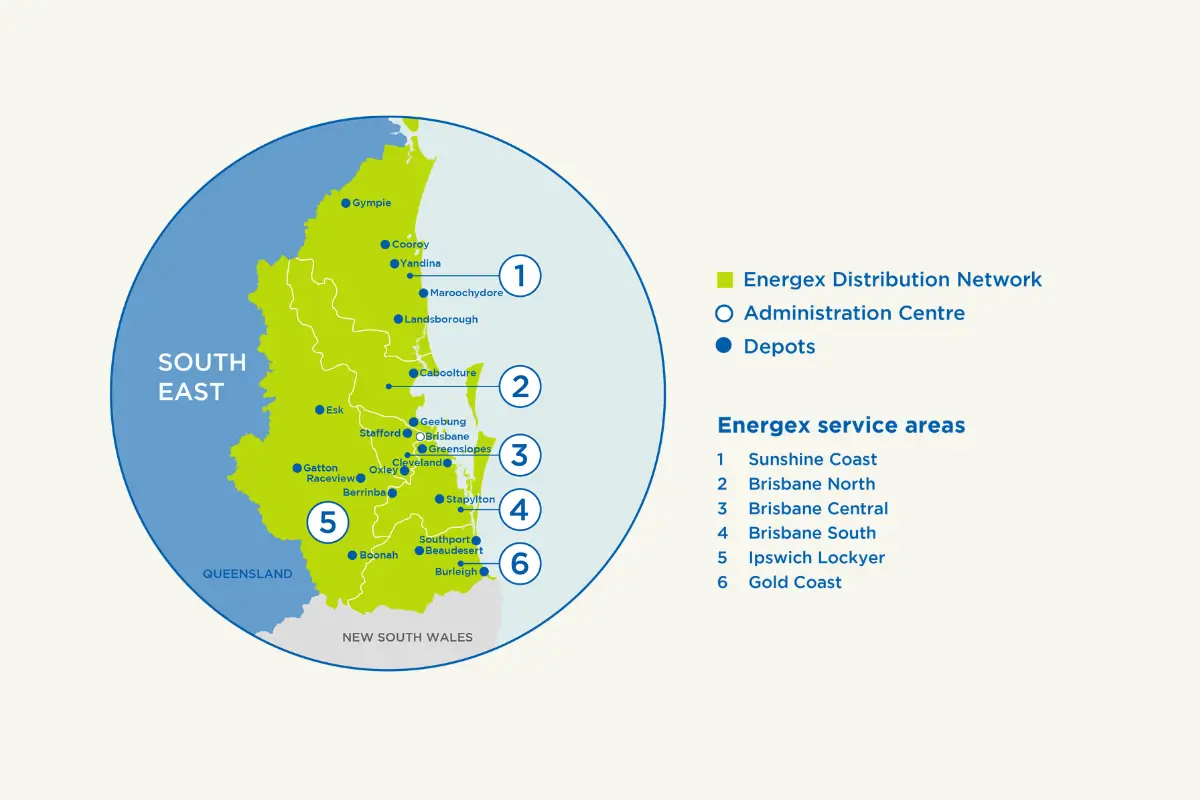
Map of Energex service area in southeast QLD
Source: Energex.com.au

Get a quote for a fully-installed charger

Answer a few questions to receive a quote that includes an Evnex EV charger, Evnex-certified installation, and on-site testing and set-up.

What about VIC, WA, TAS, and the territories?

VIC: The state government announced its own version, called the Midday Power Saver, which launches on 1 October 2026. It follows the same principle: three hours of free electricity between 11am and 2pm AEST.

WA, TAS, ACT: These regions are each governed by their own energy umpires. They have not yet announced plans to adopt a Solar Sharer equivalent scheme.  

The federal government has signalled it wants to expand Solar Sharer nationally by 2027 and is consulting with these states about how to make that work within their own frameworks.

Is there a cap to the free power window?

During the three-hour free window, you can use up to 24kWh of electricity at no charge. For context, a 7.4kW EV charger running flat out for three hours will draw about 22kWh, which fits comfortably under the cap. Running a few appliances alongside it is still fine.

If you somehow exceed 24kWh during the window (unlikely for most households), you'll be charged at the normal rate for anything above the cap.

How do I join a Solar Sharer plan?

Solar Sharer is not automatic. Nobody will be moved onto a Solar Sharer plan without their consent. Each energy retailer in the participating regions is required to have at least one Solar Sharer plan available, and you'll need to contact your retailer and specifically request it.  

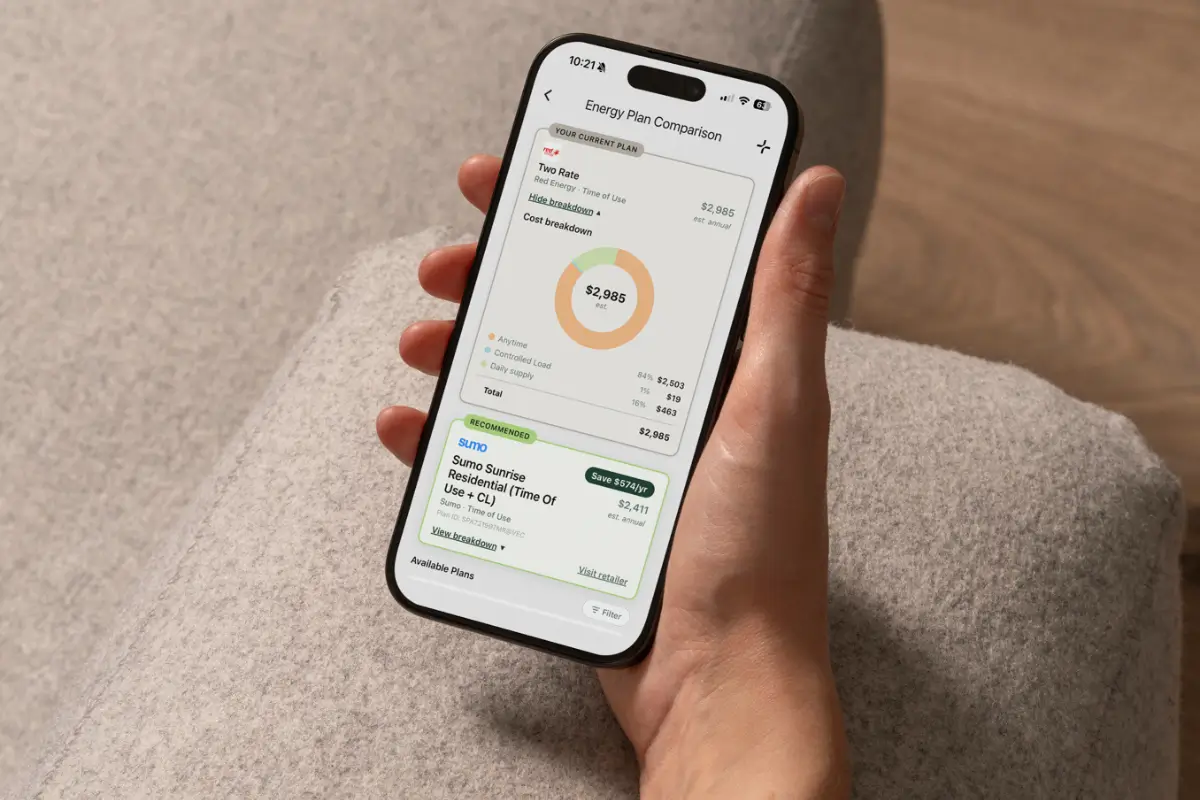
If you’re an Evnex customer, our app has a feature which will compare all available power plans and suggest the best deal based on your actual energy consumption and charging behaviour.  

Why a smart EV charger makes Solar Sharer worth it

For EV owners, the value you get from Solar Sharer depends on the charger you use. By having a dedicated smart home EV charger like Evnex, you are able to maximise the scheme more than others.  

The speed advantage

A 3-pin wall plug charges at roughly 2.3kW. In three hours, that adds about 35km of range. A 7.4kW smart home charger (like the Evnex E2 range) adds up to 150km in the same window, enough to cover three or four days of commuting in one session.

Smart scheduling

Plug your car in at any time and an Evnex charger will know when your free window is and will automatically schedule charging to start as soon as the free window begins. ‘Dumb’ chargers or wall plugs require you to be home and to plug in at the right time.  

Overload protection

When power usage behaviour shifts significantly, you run the risk of overloading your switchboard.  

Every Evnex charger includes built-in overload protection that automatically dials back the charging rate to protect your circuits.  

How to get started

  1. Check your meter. You need a smart meter to access Solar Sharer. If you're not sure whether you have one, check your electricity bill or call your retailer. If you need one installed, book it now as there may be a queue.
  1. Opt in. Contact your retailer and sign up for a Solar Sharer plan. There's a cooling-off period, and you can switch back if it doesn't work for you.
  1. Set your schedule. If you have a smart charger, ensure it’s set to charge during the free window (Evnex will do this automatically, unless you tell it not to). If you don't have one yet, you can shop now, or get a fully installed quote.

Get a quote for a fully-installed charger

Answer a few questions to receive a quote that includes an Evnex EV charger, Evnex-certified installation, and on-site testing and set-up.

Published
June 23, 2026
Jump to section